Source Manual Unisex Smith Rack for Home Gymnasium Park
Find a Manual Unisex Smith Rack suitable for home, gymnasium, and park use. Compare 30 available options featuring steel construction, CE and ISO certifications, and customizable sizes from Chinese manufacturers.
Key considerations
Products List

Fitness Equipment Multi Functional Rack Multi Function Smith Squat Rack
$580.00 - $998.00
MOQ: 1 Pieces


Gym Equipment Fitness Equipment Multi Funtion Wieght Squat Rack Smith Rack
$959.00 - $999.00
MOQ: 1 Pieces


Multifunction Smith Machine Squat Rack Home Gym Use Fitness Equipment Squat Rack
$204.00 - $214.00
MOQ: 10 Pieces

Body Building Fitness Equipment Power Rack Gym Equipment Smith Machine Squat Rack
$400.00 - $477.00
MOQ: 10 Pieces

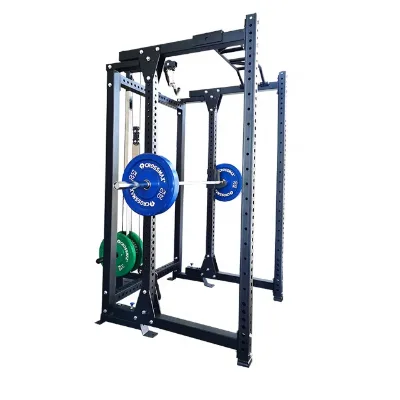


Heavy Duty All in One Smith Machine Functional Trainer Rack Manufacturer for Gym
$1450.00 - $1600.00
MOQ: 10 Sets


Customized Logo Multi Functional Smith Machine Power Rack for Home Workouts
$799.00 - $899.00
MOQ: 30 Pieces

Customized Logo Multi Functional Smith Machine Power Rack for Weight Lifting
$619.00 - $699.00
MOQ: 30 Pieces

Comprehensive Sourcing Guide
Strategic Sourcing Guide for Manual Unisex Smith Racks
The global fitness equipment market continues to expand, with commercial and residential facilities seeking durable, versatile strength training solutions. Among these, the Manual Unisex Smith Rack stands out as a critical piece of infrastructure for bodybuilding and general strength conditioning. Unlike free-weight setups, a Smith machine integrates a barbell into a steel rail system, providing guided vertical movement that enhances safety and stability. For procurement professionals, sourcing these units requires a disciplined approach that balances technical specifications, compliance verification, and supply chain reliability. This guide outlines the essential factors for evaluating manual unisex Smith racks based on observed market data and industry standards.
Technical Specifications and Structural Integrity
The core of any Smith rack is its structural design, which must support significant loads while maintaining smooth bar movement. Based on available product data, the primary construction material for these units is steel, a non-negotiable requirement for ensuring longevity in high-traffic environments. The load-bearing capacity is a critical metric; observed specifications indicate that robust models can support up to 500kg, a figure that buyers must verify against their specific usage requirements.
Dimensions vary significantly depending on the intended application and model. Standard configurations observed in the market include dimensions such as 173020102230mm and 165016202300mm. These measurements dictate the floor space required for installation. Buyers must also consider the folded versus unfolded states. Some units are designed to be folded for storage, while others, particularly those intended for permanent gymnasium or community center installation, are supplied in an unfolded state to maximize stability. The weight of the machine itself is another vital specification; observed data points to unit weights ranging from 32kg for lighter, portable models to 333kg for heavy-duty commercial units.
The power source for these racks is consistently manual, meaning the resistance is generated by the user's own effort rather than electric motors or hydraulic systems. This simplicity reduces maintenance costs and mechanical failure points. The exercise parts targeted by these machines typically include the arms and legs, facilitating a comprehensive strength training regimen. When evaluating a specific model, such as those identified by codes like CF-1022a or HQ-6629, procurement teams should cross-reference the listed dimensions and weight against the facility's spatial constraints and user demographics.
Compliance, Certification, and Safety Standards
In the B2B procurement of fitness equipment, compliance is not merely a formality but a prerequisite for liability protection and market access. The observed product data highlights that reputable manufacturers provide certifications including CE, ISO, and RoHS. The CE marking indicates conformity with health, safety, and environmental protection standards for products sold within the European Economic Area. ISO certification, often referenced alongside CE, suggests adherence to international quality management standards. RoHS compliance ensures that the product restricts the use of specific hazardous materials, which is increasingly important for environmental regulations and worker safety.
Buyers must verify that the specific supplier can provide valid documentation for these certifications. While the data lists these certifications as present, the scope of the certification (e.g., ISO 9001 for quality management vs. ISO 14001 for environmental management) should be confirmed. Additionally, the product standard dimensions listed, such as 10604101050 mm or 10957301065 mm, should be treated as specific model attributes rather than universal standards. Buyers should request detailed engineering drawings to ensure the physical footprint matches the facility's layout.
Safety is paramount in gymnasium and community settings. The "Unisex" attribute confirms that the equipment is designed for a broad demographic, but the safety mechanisms, such as safety catches and bar locks, must be robust. The "Folded" or "Unfolded" status also impacts safety; a unit that folds must have a secure locking mechanism to prevent accidental collapse during use. Procurement teams should prioritize suppliers who can demonstrate rigorous testing of these safety features, even if specific test results are not publicly listed in general catalogs.
Cost Drivers and Pricing Dynamics
The pricing landscape for manual unisex Smith racks is influenced by several variables, including material quality, load capacity, and customization options. The observed price range in the market spans from 104 to 1600 USD. This wide disparity reflects differences in build quality, brand positioning, and included features. Lower-priced units often utilize thinner gauge steel or have lower load-bearing capacities, while higher-priced models typically offer enhanced durability, custom finishes, and advanced safety features.
Material costs are a primary driver, with steel being the dominant component. The weight of the unit, ranging from 32kg to 333kg, correlates with the amount of steel used and, consequently, the cost. Heavier units generally command higher prices due to the raw material expense and the shipping costs associated with their mass. Customization is another significant cost factor. The data indicates that customization is available for color and dimensions. Custom colors and non-standard dimensions often incur additional charges and may extend lead times.
Minimum Order Quantity (MOQ) also plays a role in the final unit cost. The observed MOQ range is between 1 and 200 units. Buyers purchasing single units or small batches may face higher per-unit costs compared to those placing large orders. Payment terms, typically structured as a 30% deposit and 70% balance, are standard in this sector. Buyers should negotiate these terms based on their relationship with the supplier and the total order value. It is essential to distinguish between the base equipment cost and additional expenses such as shipping, insurance, and import duties, which can significantly impact the total landed cost.
Typical Applications and Functional Versatility
Manual unisex Smith racks are designed for a diverse range of applications, making them suitable for various facility types. The observed appliance categories include Home, Gymnasium, Park, and Community centers. This versatility allows a single product line to serve residential clients, commercial fitness chains, and public recreational facilities.
In a home setting, the compact nature of some models, such as those with dimensions around 10604101050 mm, makes them ideal for limited spaces. The ability to fold the unit can be a decisive factor for residential buyers who need to maximize living space. For gymnasiums and community centers, the focus shifts to durability and high load-bearing capacity. Units capable of supporting 500kg are essential for these environments where multiple users may train simultaneously or where heavy weights are common.
The functional focus on bodybuilding and strength exercise aligns with the needs of serious athletes and general fitness enthusiasts. The "Arm" and "Leg" exercise capabilities ensure that the rack supports a wide variety of movements, including squats, bench presses, and overhead presses. The "Strength Exercise" function is a key selling point, distinguishing these racks from cardio equipment. When selecting a rack for a specific application, buyers should consider the user traffic volume. High-traffic community parks may require the most robust models with the highest load ratings, while home users might prioritize ease of storage and assembly.
Supplier Evaluation and Supply Chain Logistics
Selecting the right supplier is as critical as selecting the right product. The observed data indicates that products originate from China, with specific manufacturing hubs in Hebei Dingzhou and Shandong. These regions are known for their manufacturing capabilities in steel and fitness equipment. Buyers should verify the specific origin of the product to ensure it aligns with their sourcing strategy and quality expectations.
Lead time is a crucial logistical factor. The observed lead time for shipping is approximately 20 days after receiving the initial payment. This timeline should be factored into project schedules, especially for commercial installations with strict opening dates. Buyers must confirm whether this lead time includes production time or if it is purely the shipping duration. Shipping methods are predominantly sea freight, which is cost-effective for heavy items but requires careful planning regarding port logistics and customs clearance.
Packaging is another area requiring attention. Observed packing methods include Carton Box, Cloth, Plywood Case, and combinations like Plywood Case with EPE foam and bubble film. The choice of packaging impacts the safety of the product during transit. Plywood cases are generally preferred for heavy, high-value units to prevent damage, while carton boxes may suffice for lighter models. Buyers should explicitly request packaging specifications that match the fragility and weight of the unit to minimize the risk of damage during shipping.
Quality Control and Long-Term Procurement Considerations
Quality control (QC) should be an integral part of the procurement process, not an afterthought. Given the safety implications of lifting heavy weights, buyers should implement a rigorous QC protocol. This includes verifying the steel thickness, weld quality, and the smoothness of the bar movement. The warranty period, observed as 1 year for some models, provides a baseline for expected product lifespan, but buyers should negotiate extended warranty terms for commercial applications.
Long-term procurement considerations involve the availability of spare parts and the potential for future customization. The "Customization" attribute suggests that suppliers can adapt products to specific needs, which is valuable for branding or specific facility requirements. Buyers should ensure that the supplier has a reliable supply chain for replacement parts, such as bushings, safety bars, and weight plates, to minimize downtime.
The "Unisex" nature of the equipment implies a universal design, but buyers should still consider the specific needs of their user base. For example, a community center serving a wide age range might benefit from adjustable height settings or safety features that cater to both younger and older users. The "Bodybuilding" function suggests a focus on heavy lifting, so the stability of the base and the quality of the guide rails are paramount.
Comparative Analysis of Product Attributes
To assist in decision-making, the following table summarizes key attributes observed in the market for manual unisex Smith racks. This comparison highlights the variability in specifications and helps buyers identify the features most relevant to their specific needs.
| Attribute | Observation Range / Specifics | Procurement Implication |
|---|---|---|
| Material | Steel | Essential for durability; verify steel grade and thickness. |
| Load Bearing | Up to 500kg | Critical for commercial use; ensure rating exceeds max user weight. |
| Dimensions | 10604101050mm to 173020102230mm | Must match facility floor plans; check clearance for bar travel. |
| Weight | 32kg to 333kg | Heavier units are more stable but cost more to ship. |
| Certification | CE, ISO, RoHS | Mandatory for safety compliance; request valid certificates. |
| Packing | Carton, Plywood Case, EPE Foam | Plywood cases preferred for heavy units; verify protection level. |
| Lead Time | ~20 Days after deposit | Plan project timelines accordingly; confirm start date. |
| Payment | 30% Deposit, 70% Balance | Standard term; negotiate based on order volume. |
| Origin | China (Hebei Dingzhou, Shandong) | Verify specific factory location for quality assurance. |
| Function | Bodybuilding, Strength Exercise | Align with target user training goals. |
Final Procurement Recommendations
Sourcing manual unisex Smith racks requires a balanced approach that prioritizes safety, durability, and compliance. Buyers should begin by defining their specific requirements regarding load capacity, dimensions, and intended application. The wide range of available models, from lightweight home units to heavy-duty commercial racks, offers flexibility but necessitates careful selection.
Verification of certifications such as CE and ISO is non-negotiable to ensure the product meets international safety standards. Buyers should also scrutinize the packaging and shipping methods to prevent damage during transit. The lead time of approximately 20 days should be integrated into the project schedule, and payment terms should be negotiated to protect the buyer's interests.
Ultimately, the goal is to acquire equipment that serves the facility's needs effectively while minimizing long-term maintenance and replacement costs. By focusing on the technical specifications, compliance documentation, and supplier reliability, procurement professionals can make informed decisions that enhance the safety and functionality of their fitness facilities. The observed data provides a solid foundation for these decisions, but continuous due diligence and clear communication with suppliers remain essential for successful procurement outcomes.
FAQs
What certifications do manual unisex smith racks typically have?
Manual unisex smith racks typically carry CE, ISO, and RoHS certifications. These marks indicate compliance with European safety standards and international quality management systems, ensuring the equipment restricts hazardous materials for safe use in gyms and homes.
How much weight can a Manual Unisex Smith Rack support?
A Manual Unisex Smith Rack can support up to 500kg of load bearing capacity. This high capacity ensures stability for heavy bodybuilding exercises, making it suitable for commercial gymnasiums and community centers where multiple users train simultaneously.
Which dimensions are standard for Manual Unisex Smith Rack models?
Standard dimensions for Manual Unisex Smith Rack models vary, with common sizes like 1730*2010*2230mm or 1650*1620*2300mm. Buyers must verify specific model dimensions against their facility space to ensure proper installation and safe operation.
Can manual unisex smith racks be customized for specific needs?
Yes, manual unisex smith racks can be customized for color and specific dimensions. This flexibility allows buyers to match facility branding or spatial constraints, though customization may affect lead times and final pricing compared to standard units.
How long is the lead time for shipping manual unisex smith racks?
The lead time for shipping manual unisex smith racks is approximately 20 days after receiving the initial payment. This timeline covers production and preparation, so buyers should plan their project schedules accordingly to avoid delays in facility opening.
What is the typical price range for manual unisex smith racks?
The typical price range for manual unisex smith racks spans from 104 to 1600 USD. This variation depends on factors like material quality, load capacity, and customization options, with heavier steel units generally commanding higher prices.
Which payment terms are standard for Manual Unisex Smith Rack orders?
Standard payment terms for Manual Unisex Smith Rack orders require a 30% deposit and a 70% balance. This structure is common in the industry to secure production while ensuring the supplier receives full payment before final shipment.